Wednesday, August 03, 2011

Plans to build budget trip to Mars

Mars
NASA is working with private industry to go well beyond simply supplying ferry flights to the International Space Station, but to Mars on the cheap.

Space Exploration Technologies, or SpaceX, is preparing to launch its second test Dragon capsule on 30 November with the intention of docking it at the space station.

In addition to carrying cargo to and from the station, SpaceX plans to upgrade the Dragon to fly people into space and to one day land it on Mars.

"We figured out that for a pretty low cost, a Dragon capsule on a Falcon Heavy (rocket) could go to Mars for hundreds of millions of dollars, not billions," says Pete Worden, director of NASA's Ames Research Center, speaking at the NewSpace 2011 commercial space conference last weekend.

The mission, informally known as Red Dragon, would follow NASA's upcoming US$2.5 billion (AU$2.3 billion) Mars Science Laboratory, which is due to launch in November and arrive on Mars next August. Its goal is to determine if the red planet is, or ever was, suitable for microbial life.

Read More

Tuesday, August 02, 2011

Driving on the moon: the 40-year legacy of NASA's first lunar car

Moon
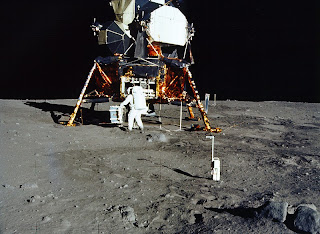
When NASA's Apollo 15 astronauts David Scott and James Irwin touched down on the moon 40 years ago, they had an extra special tool packed away on their lunar lander: a dune buggy-size rover that enabled them to become the first humans to drive on the surface of a world beyond Earth.
Rover technology has made great strides since Scott and Irwin landed on the moon on July 30, 1971, but the lessons learned from NASA's first Lunar Roving Vehicles (LRVs) are still applicable today. While technology has evolved since the Apollo era, NASA's first rovers are influencing manned and robotic vehicles for exploration on Mars and beyond.

The "LRV on Apollo fulfilled a very important need, which was to be able to cover large traverses, carry more samples, and get more scientific exploration done," Mike Neufeld, a curator in the space history division at the Smithsonian National Air and Space Museum in Washington, D.C. told SPACE.com. "It was a really important part of why Apollo 15, 16 and 17 were so much more scientifically advanced and productive."

Apollo 15 was the fourth mission to land men on the moon, and it was the first of three missions to use the LRVs. The rover had a mass of about 460 pounds (208 kilograms) and was designed to fold up so it could fit inside a compartment of the Lunar Module.

Read More


Thursday, July 28, 2011

Meteor showers to streak under a dark moon

Dark Moon
Each summer skywatchers all over the world look forward to observing the annual mid-August performance of the Perseid meteors, but often overlook some of the lesser showers that peak in the days leading up to the main event.

This year, sadly, the full moon will seriously hamper the 2011 Perseid meteor shower. But this week, the moon is a thin waning crescent and will arrive at new phase on Saturday, leaving the sky dark and moonless from dusk to dawn.

This makes it a great opportunity to enjoy two displays of "shooting stars" that will be active and near their peak this weekend, which can provide some entertaining viewing: the Delta Aquarids and the Alpha Capricornids.

How to watch
The actual number of meteors an observer can see in an hour depends strongly on sky conditions. The rates that we quote here are based on your having a really good, dark sky, having some experience in meteor observing and the assumption that you have the radiant of that particular shower directly overhead.

Read More

Wednesday, July 27, 2011

NASA's future: Let's go to Mars, an asteroid

Mars
With the end of the space shuttle program, NASA shifts its sights onto new projects.

Since the 1958 Space Act, NASA has held a strong foothold in space discovery and science. With the conclusion of the space-shuttle program, NASA is reevaluating its goals and looking for ways to continue to expand space travel.

"Human space flight has a bright future, Lori Garver, NASA Deputy Administator, said. "The space shuttle was a great program, and we are so pleased that that program is now leading to the next great adventures in space."

NASA's immediate goals are to make successful trips to an asteroid and then to the planet Mars. NASA hopes that using the technology developed under the Shuttle program for these next missions will be big money savers.

"We are looking at being able to go to space for a lot less money using advanced technology and using the aerospace industry," Garver said.

Read More

Tuesday, July 26, 2011

NASA - How A Girdle Made The Moon Landing Possible

Nasa Moon
With the end of the space shuttle, we may also be seeing an end to manned space travel as a science endeavor. I am not saying we shouldn't send people into space, we certainly should, but it should be just that - a bold voyage into the unknown and not rationalized with science, where it is not a very good one. Robots are cheaper and better and the Congressional hearings are less messy if a robot dies.

President Obama likely agrees about robots, since he canceled the manned successor to the space shuttle, the Constellation project and there is no valid replacement in sight.

With the space shuttle over, people have given it a lot more honest reassessment that they did in the past - before a week ago, virtually no one in science media would do anything except be a cheerleader for the thing. But the space shuttle also did something positive - it showed us newer is not always better. Some old NASA stuff is still pretty cool.

When talking about the Mercury program, for example, and comparing the NASA of that time to that of today, I noted that we can still fire up an Apollo RS-18 engine from 39 years ago and it works just fine, so it shouldn't take 16 years to go back to the Moon when it only took 9 years the first time. We've lost our way because space started being about science and not about boldly going where no man has gone before.

Read More

Monday, July 25, 2011

Rare Volcanoes Discovered On Far Side of the Moon

Volcanoes on Moon
Shielded from Earth-bound eyes, the far side of the moon is home to a rare set of dormant volcanoes that changed the face of the lunar surface, a new study finds.

Data and photos from NASA's Lunar Reconnaissance Orbiter (LRO) reveal the presence of now-dead silicate volcanoes, not the more common basaltic volcanoes that litter the moon's surface, researchers said.

"Most of the volcanic activity on the moon was basaltic," primary author Brad Jolliff of Washington University told SPACE.com in an email. "Finding other volcanic types is interesting as it shows the geologic complexity and range of processes that operate on the moon, and how the moon's volcanism changed with time."

Because the moon's rotation has been affected by tidal forces between the Earth and the moon, only one side of the moon is visible from the Earth. The far side of the moon — sometimes referred to inaccurately as the "dark side" — was hidden from view until 1959, when Soviet Union's Luna 3 spacecraft took the first photos of the region.

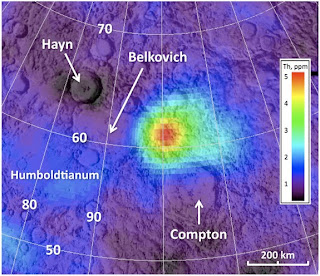
When NASA's Lunar Prospector probe circled the moon in 1998, it revealed a highly reflective plain lying between two ancient impact craters. Known as the Compton-Belkovich region, this part of the moon contains thorium and other silicate rocks, suggesting a more involved type of volcanic activity than that which created the moon's well-known dark plains of basaltic plains known as "maria," or "seas."

Read More

Next Mars Rover Targets Gale Crater

Mars
When NASA's Vikings reached Mars 35 years ago, scientists and engineers had only vague ideas about where the mission's twin life-seeking landers should set down on the surface. Remarkable in hindsight, members of the site-selection team gave themselves only two weeks to find the best landing spot for Viking 1 — and ultimately had to scrap their provisional Plans A and B (too many big rocks!) and delay the first landing by two more weeks as they scrambled to find a suitable Plan C.

There'll be no such hurry-up offense for the space agency's next Red Planet adventure. When the Mars Science Laboratory (a.k.a. "Curiosity") departs Earth on or about November 25th, the mission's 263 scientists will know with certainty that it's headed for 4.4868ºS and 137.4239ºE — a target on the broad floor of Gale crater.

NASA managers announced the choice of Gale over three other final candidates during an hour-long press briefing on Friday.

Whereas the Viking team had only relatively crude orbital imagery, some water-vapor measurements, and a few ground-based radar scans to work with, MSL's site selection involved deliberations over five years by 150 scientists, who hashed over 60 possible sites using 16 sets of detailed measurements and met in five dedicated workshops. The final four candidates, which underwent intense scrutiny after being picked in 2008, were:

Read More

Friday, July 22, 2011

No hoax: Moon landing stands as NASA's finest hour

Moon
As Atlantis rolled to a stop on its Florida landing strip, ending the space shuttle fleet’s 30-year run, the atmosphere around NASA is filled with uncertainty.
Image: "Moon Shot"
Open Road Integrated Media
"Moon Shot" recounts the story of the early space effort. NBC News correspondent Jay Barbree has updated the book, written with astronauts Alan Shepard and Deke Slayton as co-authors, for the 50th anniversary of the first U.S. and Soviet spaceflights.

It's not like it was 42 years and a day ago, at the time of America’s highest space triumph. That’s when Neil Armstrong took humankind’s first steps on the moon. The only thing for sure following Atlantis’ farewell flight is that most members of its launch team will be out of a job.

Critics say NASA is in shambles. They say foot-dragging and indecision by the Obama administration has left America with no defined mission in space. NASA Administrator Charlie Bolden, a veteran astronaut himself, strongly disagrees. "I’m not about to let human spaceflight go away on my watch," he says.

Despite the dithering, private companies could have Americans flying in their commercial spacecraft by 2015, and Bolden says test flights aimed at sending astronauts to deep space on NASA spaceships could begin in 2016 or 2017.

Back in 1969, the scene at America’s spaceport was clearly different: Neil Armstrong and Buzz Aldrin’s walk on the moon represented the height of prestige for America’s space program. The country was first. Americans were beating the Russians. A decade-long race to put a human on another world had ended.

Read More

Thursday, July 21, 2011

Where Will the Next Mars Rover Land? NASA to Announce Crater Choice Friday

Mars Rover
NASA is set to announce the landing site for its next Mars rover Friday (July 22), and one thing's for certain: It will be a crater.

Earlier this month, the space agency revealed that its $2.5 billion Mars Science Laboratory mission will drop the car-size Curiosity rover down at either Gale Crater or Eberswalde Crater. Both Martian sites appear to preserve a record of ancient water activity. That's crucial, because Curiosity's main task is to assess whether Mars is, or ever was, capable of supporting microbial life.

So which crater has NASA picked? The space agency hasn't tipped its hand, saying publicly that both craters have a lot to offer and that choosing between them is tough.

Read More

NASA's Opportunity Tops 20 Miles of Mars Driving

Nasa Mars
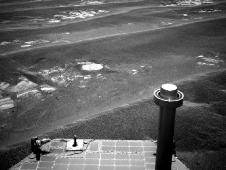
More than seven years into what was planned as a three-month mission on Mars, NASA's Mars Exploration Rover Opportunity has driven more than 20 miles, which is more than 50 times the mission's original distance goal.
A drive of 407 feet (124 meters) completed on July 17 took Opportunity past the 20-mile mark (32.2 kilometers). It brought the rover to within a few drives of reaching the rim of Endeavour crater, the rover's team's long-term destination since mid-2008. Endeavour is about 14 miles (22 kilometers) in diameter, and its western rim exposes outcrops that record information older than any Opportunity has examined so far. The rover is now about eight-tenths of a mile (about 1.3 kilometers) from the site chosen for arriving at the rim.

"The numbers aren't really as important as the fact that driving so much farther than expected during this mission has put a series of exciting destinations within Opportunity's reach," said Alfonso Herrera, a rover mission manager at NASA's Jet Propulsion Laboratory, Pasadena, Calif. who has worked on the rover missions since before launch in 2003.

The latest drive included an autonomous hazard detection portion during which the rover paused at intervals to check for obstacles before proceeding.

Herrera said, "Autonomous hazard detection has added a significant portion of the driving distance over the past few months. It lets us squeeze 10 to 15 percent more distance into each drive."

Read More

Tuesday, July 19, 2011

42 years ago, man landed on the moon

Moon Landing
"Here men from the planet earth first set foot upon the moon July 1969 A.D. We came in peace for all mankind." – Inscription on plaque left on the moon by Apollo 11 astronauts

(RNN) - It is perhaps the crowning achievement in human history.

And it was a dream came true 42 years ago this week when Earth was joined by its only natural satellite in playing host to humans.

Neil Armstrong became the first man to set foot on the moon July 20, 1969, fulfilling President John F. Kennedy's goal to surpass the Soviet Union in the space race. The United States sent five additional manned missions to the moon, and remains the only country to do so.

Describing the surface as "fine and powdery," Armstrong uttered one of the most famous lines ever spoken to mark the monumental event, and put the achievement into perspective.

"That's one small step for man. One giant leap for mankind."

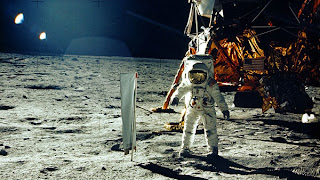
For 2 1/2 hours, Armstrong and Edwin "Buzz" Aldrin explored the lunar surface, collected rock samples, photographed the surface of the moon, the Earth and each other, and placed an American flag to stake claim to being the first country to visit another celestial body.

"We wanted to do well," Armstrong said in a rare interview with CBS' 60 Minutes in 2005. "But more than that, you as a person hope you don't make any mistakes."

Armstrong said in the interview that the famous statement after stepping on the moon was meant to honor the countless number of individuals whose work helped make the lunar landing, and the entire space program, possible.

Read More

Monday, July 18, 2011

Mars rover's destination decided

Mars Rover
After years of deliberation, NASA says it will announce the destination for its next Mars rover on Friday at the Smithsonian Institution's National Air and Space Museum.

Earlier this month, the choice was whittled down to two: NASA said the Curiosity rover, also known as the Mars Science Laboratory, would be launched either to Eberswalde Crater or Gale Crater. Today's announcement signals that a decision has been made.

Curiosity is already at NASA's Kennedy Space Center, undergoing final preparations for launch as early as Nov. 25, the day after Thanksgiving. The car-sized rover is scheduled to arrive at Mars in August 2012 to begin a primary scientific mission scheduled to last at least one Martian year, or roughly two Earth years.

Among the questions the $2.5 billion mission could answer: Were there areas on the Red Planet that could have been favorable for supporting microbial life? Could "molecular fossils" preserve the evidence of such life? Past missions have turned up evidence that ancient Mars was warmer and wetter than it is today, but how long did those life-friendly conditions last?

Read More

Sunday, July 17, 2011

Vesta Astroid : US Spacecraft Orbits Vesta Astroid

vesta asteroid
NASA’s Spacecraft Dawn has officially entered the orbit of one of Vesta.

“Today, we celebrate an incredible exploration milestone as a spacecraft enters orbit around an object in the main asteroid belt for the first time,” NASA Administrator Charles Bolden said on NASA.gov.

Dawn became the first probe ever to enter the orbit around an object in the main asteroid belt between Mars and Jupiter, according to NASA.

Vesta is one of the largest asteroids in the solar system and Dawn will orbit it and rely information back to scientists. Observations will provide data to help scientists understand the solar system better.

“Dawn’s study of the asteroid Vesta marks a major scientific accomplishment and also points the way to the future destinations where people will travel in the coming years,” NASA Administrator Charles Bolden said on NASA.gov.

Read More

Thursday, July 14, 2011

Stealing moon rocks from NASA

Moon Rocks
RETURNING from vacation in the summer of 2002, NASA geochemist Dr Everett Gibson learned that a 275-kilogram safe had vanished from his lab. Situated in one of the most secure buildings on the planet, the lab was an implausible target for even the world's greatest crime syndicates - despite the fact that the Apollo lunar samples were stored there and the street price of moon rocks was estimated at about $5 million per gram.

The theft of the safe, which contained 101.5 grams of material, including samples from every lunar landing, was in fact stranger and more pedestrian than anyone could have imagined. Late one night, three NASA interns wheeled the safe into a borrowed Jeep, planning to hawk the material to a Belgian buyer they had found online. Within days they were caught, turned in by the Belgian and arrested in an FBI sting.

After serving a six-year prison sentence, Thad Roberts - the "mastermind" of this unmasterly crime - called Ben Mezrich, bestselling author of The Accidental Billionaires, seeking to reveal his side of the story. Trumped up by Mezrich as "one of the biggest heists in US history", Sex on the Moon is the entertaining yet unsatisfying result of that collaboration.

Mezrich relates Roberts's life as a thriller. Cast out by his Mormon family for premarital sex, Roberts finds direction by resolving to become an astronaut. He studies hard and lands a coveted internship at NASA's Johnson Space Center, where he impresses fellow interns with pranks such as sneaking into the space shuttle simulator. In his third semester, he falls in love with a new intern. "I want to give you the moon," he tells her.

Read More

Wednesday, July 13, 2011

SpaceX chief sets his sights on Mars

spacex
Don't expect to hear any nostalgia about the soon-to-end space shuttle era from Elon Musk, the millionaire founder of Space Exploration Technologies. Musk isn't prone to look to the past, but rather to the future — to a "new era of spaceflight" that eventually leads to Mars.

SpaceX may be on the Red Planet sooner than you think: When I talked with him in advance of the shuttle Atlantis' last liftoff, the 40-year-old engineer-entrepreneur told me the company's Dragon capsule could take on a robotic mission to Mars as early as 2016. And he's already said it'd be theoretically possible to send humans to Mars in the next 10 to 20 years — bettering NASA's target timeframe of the mid-2030s.

You can't always take Musk's timelines at face value. This is rocket science, after all, and Musk himself acknowledges that his company's projects don't always finish on time. But if he commits himself to a task, he tends to see it through. "It may take more time than I expected, but I'll always come through," he told me a year ago.

Read More

Tuesday, July 12, 2011

Iapetus gets dusted

Saturn's Moon
Imagine a powdered sugar doughnut hole plowing through a cloud of dark-chocolate dust. The resulting two-colored treat would resemble one of Saturn’s weirder moons, Iapetus — an icy world with a coal-black face and a bright white backside.

For centuries astronomers have puzzled over the source of this yin-yang color pattern. Now a team led by graduate student Daniel Tamayo of Cornell offers an explanation: Dust flung from another one of Saturn’s moons is coating one side of Iapetus. Because Iapetus doesn’t rotate, the same face continually catches the dark moon flakes.

“Iapetus is probably one of the most striking bodies in the solar system, and one of the longest-standing problems in planetary science,” Tamayo says. In a study posted online July 7 in Icarus, Tamayo mathematically describes the movement of dust particles in the outer Saturnian system. He focuses on dust coming from Phoebe, a dark and distant, irregularly shaped moon that circles Saturn in the opposite direction as Iapetus. Phoebe’s retrograde motion puts it at odds with a number of other far-flung moons.

Read More

China want to explore the Moon, Venus and Mars

china
In light of last week's final NASA space shuttle launch, Beijing is stepping up to the plate with aspirations of exploring the Moon, Venus and Mars.

China plans to send a rover to the moon by 2013 and an astronaut by 2020. As the U.S. slows its space initiatives, many are worried that the Chinese may become the leader in space exploration, knocking the U.S. from its long-held top spot.

"Space leadership is highly symbolic of national capabilities and international influence, and a decline in space leadership will be seen as symbolic of a relative decline in U.S. power and influence," said Scott Pace, an associate NASA administrator in the George W. Bush administration and proponent for sending American astronauts back to the moon.

Some American officials are worried Beijing may try to militarize space because the space initiatives are run by the army. Just four years ago, the Chinese fired a missile at a dead satellite in space, something which sent up a red flag for many officials.

Refuting the idea that the Chinese hope to militarize space, Li Longchen, former editor of Space Probe Magazine said, "Space technology can be applied for both civilian and military use, but China doesn't stress the military purpose. It has been always hard for humankind to march into space and China must learn the lessons from the U.S."

Read More

Sunday, July 10, 2011

Mars, Asteroids, The Moon on NASA's To-Do List

Mars
Space shuttles will soon be a thing of the past, museum relics put on display around the country. But, NASA will remain, and they're determined to take the next steps in space exploration - without the shuttle taking them there.

Surrounded by the blackness of deep space, 117 million miles from Earth, is the asteroid "Vesta". In the not too distant future, U.S. astronauts could be looking out their window and preparing to set foot on an asteroid.

Astronaut Mike Gernhardt and his team are working on the kinds of equipment and techniques they'll need for human exploration of an asteroid as early as the year 2025 - before missions to either the Moon or Mars.

"What we're doing is building a simulated asteroid underwater." said Gernhardt. Not at some high tech lab, but right on the water in Key Largo, Florida. At the undersea habitat called "Aquarius", the group has created an asteroid proving ground in the near weightless environment of water. "We work there, we live there.....We can put anchors......We built a rock wall like a climbing wall. But we can climb up that wall in zero gravity."

Read More

Friday, July 08, 2011

Saturn: Bring an Umbrella

saturn
The disturbances on Saturn shown here depict the largest, most intense storm observed on Saturn by NASA’s Voyager or Cassini spacecraft. The storm, currently active, encircles the giant planet, encompassing an area eight times the surface area of earth. Inside the planet’s atmosphere, lightning is generated in the water clouds where rain and hail make electricity, creating significant radio noise. Scientists are mystified as to why Saturn stores energy for decades and releases it all at once. This behavior is unlike that at Jupiter and Earth, which have numerous storms going on at all times. Carolyn Porco, the Cassini Imaging Team Leader, writes in her Captain’s Log on July 6th, 2011:

“One might think that after years in orbit around Saturn, we are now accustomed to great big happenings and fantastic spectacles. But far from it. It is the shock of the unexpected, the intense mind-grabbing, eye-popping, soul-stirring thrill of seeing the unseen that gets us every time. That is what this glorious, history-making exploration of Saturn and its magnificent realm is all about.”

This picture, captured on Feb. 25, 2011, was taken about three months after the storm began. By this time the clouds had already formed a tail that wrapped around the planet. This tail, which show as blue-tinged clouds south and west (left) of the storm head, can be seen encountering the storm head in this view. To see ravishing close-up images of the storm, click here.

Read More

Wednesday, July 06, 2011

Mars, Asteroids, The Moon on NASA's To-Do List

Mars
Space shuttles will soon be a thing of the past, museum relics put on display around the country. But, NASA will remain, and they're determined to take the next steps in space exploration - without the shuttle taking them there.

Surrounded by the blackness of deep space, 117 million miles from Earth, is the asteroid "Vesta". In the not too distant future, U.S. astronauts could be looking out their window and preparing to set foot on an asteroid.

Astronaut Mike Gernhardt and his team are working on the kinds of equipment and techniques they'll need for human exploration of an asteroid as early as the year 2025 - before missions to either the Moon or Mars.

"What we're doing is building a simulated asteroid underwater." said Gernhardt. Not at some high tech lab, but right on the water in Key Largo, Florida. At the undersea habitat called "Aquarius", the group has created an asteroid proving ground in the near weightless environment of water. "We work there, we live there.....We can put anchors......We built a rock wall like a climbing wall. But we can climb up that wall in zero gravity."

Read More

Tuesday, July 05, 2011

NASA Introduces Mars Rover "Curiosity," Debates Its Martian Landing Site

Mars Rover
Curiosity is expected to launch from Cape Canaveral Air Force Station in Florida on November 25, 2011, and will land on Mars in August 2012. The decision regarding its landing site is expected to be made this month

After recently retiring Mars rover Spirit, NASA is introducing a new Mars probe called Curiosity. While the rover is expected to launch later this year, one critical question remains unanswered: where will it land?

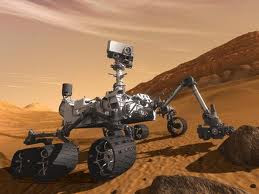
NASA rover Curiosity is a $2.5 billion, nuclear-powered machine that is the size of a Mini Cooper, and is four times as heavy as Spirit and Opportunity. Curiosity contains a laser that can vaporize rocks at seven meters, a percussive drill, a large robot arm and a weather station. In addition, it has 4.8kg of plutonium-238.

Curiosity's main mission on Mars is to find organic compounds as a "telltale sign" that life have existed on Mars. The problem is that scientist's must decide on a landing area that will most likely contain such evidence.

So far, scientist's have narrowed the choices down to four options: Eberswalde Crater, Mawrth Vallis, Gale Crater and Holden Crater

Read More

Alabama Space Camp shifts its focus to the moon, Mars and asteroids

Moon and mars
NASA may be shutting down its space shuttle program, but that won’t stop a group of young astronauts from heading to the moon this summer, and Mars the next.

In simulation, at least.
For 29 years, Space Camp and its attendees have followed in NASA’s footsteps. This summer, the camp is taking the next giant leap for mankind largely on its own. The U.S. government may not want to fund space travel right now, but many children and adults have the money to pretend.

Space Camp was started in 1982, just a year after the first space shuttle launch, and is run by the nonprofit U.S. Space & Rocket Center in Huntsville, Ala., which is funded by the state of Alabama and serves as the official visitor center for NASA’s nearby Marshall Space Flight Center.

Read More

Monday, July 04, 2011

NASA Targets Manned Mission To Mars

nasa mars mission
The end of the space shuttle program does not mean the end of NASA, or even of NASA sending humans into space. NASA has a robust program of exploration, technology development and scientific research that will last for years to come. Here is what’s next for NASA:

Exploration

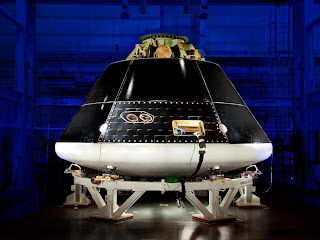
NASA is designing and building the capabilities to send humans to explore the solar system, working toward a goal of landing humans on Mars. We will build the Multi-Purpose Crew Vehicle, based on the design for the Orion capsule, with a capacity to take four astronauts on 21-day missions.

NASA says it will soon announce the design for the heavy-lift Space Launch System that will carry them out of low Earth orbit. It is developing the technologies it will need for human exploration of the solar system, including solar electric propulsion, refueling depots in orbit, radiation protection and high-reliability life support systems.

Read More

Friday, July 01, 2011

Is Settling Mars Inevitable, Or An Impossibility?

mars
This is SCIENCE FRIDAY. I'm Ira Flatow. We're not going to the planet Mars anytime soon. President Obama suggested something like the mid-2030s as a target date, but for various reasons - the dangers of space travel, the price tag, more pressing problems on this planet - that trip to the Red Planet has been put on indefinite hold.

My next guest says that's a mistake. We can and should be able to make the trip by 2020, and he says that technology - technologically speaking, we're already closer to being able to send astronauts to Mars than we were to sending men to the moon back in 1961, when President Kennedy made his pronouncement.

But what about all the obstacles: radiation, length of the trip, the lack of gravity during the voyage and all the potential hazards to the astronauts? Robert Zubrin has solutions to every one of these problems, and he's not just thinking about exploratory scientific field trips, he envisions human colonies growing crops in Martian soil, making energy from the atmosphere, even evolving new cultures and dialects.

So what do you think? Would you volunteer as a colonist from Mars? Or are you happy to let NASA's Rovers, the robots, explore the Red Planet? Give us a call. Our number is 1-800-989-8255, 1-800-989-TALK. You can tweet us @scifri, @-S-C-I-F-R-I. Or you can go to our Facebook page or our website. Our home page is sciencefriday.com.

Robert Zubrin is the author of "The Case for Mars: The Plan to Settle the Red Planet and Why We Must." He's also president of the Mars Society based in Golden, Colorado. He joins us from the studios of Colorado Public Radio. Welcome back to SCIENCE FRIDAY, Dr. Zubrin.

Read More

For Visits to Asteroid & Mars, NASA Needs New Ways to Do Everything

Mars
With NASA at a crossroads as the space shuttles retire, the space agency is facing the steep challenge of developing a slew of new technologies for a new phase in exploration: trips to an asteroid and Mars.

For 30 years, NASA astronauts have worked in low-Earth orbit, flying on the space shuttlesand building the International Space Station. Now that the station is complete and the shuttle program is winding down, the United States is focusing on sending astronauts farther out in the solar system than ever before.

NASA's next big goals for human spaceflight, as articulated by President Barack Obama, are visiting an asteroid by the year 2025 and landing on Marsin the 2030s.

"We're not going to get to an asteroid in 2025 without some of the key building blocks that NASA wants to start on today," NASA's chief technologist Bobby Braun told reporters during a June 27 teleconference.

Read More


Tuesday, June 28, 2011

The Case For Mars: The Plan to Settle the Red Planet and Why We Must

mars
Fifteen years ago, aerospace engineer Robert Zubrin published The Case for Mars, and issued a clarion call to his fellow scientists, and the people of Earth. We need to plan our Mars colony, and we need to do it now.

Today Zubrin has released an updated and revised version of his classic book, outlining the most realistic way to get ourselves to Mars and start setting up a human society there. Smart, idealistic, and pragmatic, this book is more important than ever. And we've got an excerpt from it.

A lot has happened in the 15 years since The Case for Mars was first published. A string of robotic mission were launched to the Red Planet, including Mars Pathfinder and Mars Global Surveyor in late 1996, Mars Polar Lander and Mars Climate Orbiter in 1999, Mars Odyssey in 2001, Spirit, Opportunity, and Mars Express in 2003, Mars Reconnaissance Orbiter in 2005, and Phoenix in 2007. With the exception of the 1999 flights, all of these missions have been brilliantly successful. As a result, our knowledge of the planet has greatly increased.

Read More

Monday, June 27, 2011

Small asteroid swings harmlessly past Earth

Asteroid
An asteroid the size of a tour bus streaked harmlessly past Earth on Monday, passing within 7,600 miles (12,230 kilometers).

Discovered only last week, the relatively small space rock made a hairpin turn around the planet at about 10 a.m. PDT (1800 GMT), sailing high over the southern Atlantic Ocean.

In truth, there was never any doubt it would miss. But given the vastness of the universe, 7,600 miles (12,230 kilometers) is practically a stone’s throw away, at about three times the distance between New York and Los Angeles.

The asteroid, dubbed 2011 MD, was initially mistaken by astronomers for a piece of space junk because it was so small, at up to 60 feet (18 meters) wide. Later observations confirmed it was an asteroid that had no chance of hitting Earth.

Asteroids of this size typically brush by Earth every six years. In fact, earlier this year, a smaller one came even closer to our planet, passing within 3,500 miles (5,630 kilometers).

Even if the latest one had aimed straight for us, it would have burned up in the atmosphere and not caused any damage on the ground.

Read More

Sunday, June 26, 2011

Missing Apollo 11 moon dust is returned to NASA

Moon Dust
The few specks of dust stuck to a small swatch weren't much to look at, but federal prosecutors said Thursday they came from the moon via Apollo 11 and have been sent back to NASA, where they belong.

U.S. Attorney Richard Callahan in St. Louis said the dust is believed to be at least part of what was smuggled out of Johnson Space Center by a NASA worker years ago. It was discovered in St. Louis last month, just before it was to be auctioned.

It is illegal for individuals to own moon material, but Callahan's office said the auction consignor was a woman who didn't know how the dust had come to her late husband. She was not charged.

Read More

Friday, June 24, 2011

Scientists: Saturn moon could support life

Saturn's Moon
Where there's salt, there's water and rock, it seems. And where there's water and rock, there could be life.

NASA's Saturn-exploring Cassini spacecraft has gathered new evidence that conditions on Enceladus, one of Saturn's 53 named moons, could support life, said Dr. Carolyn Porco, director of the Cassini Imaging Central Laboratory for Operations at the Space Science Institute in Boulder, Colorado.

"On Enceladus we have conditions under the surface that we know could be enjoyed by organisms similar to types of organisms we find right here on Earth," she said Friday.

Several years ago, Cassini, launched in 1997, spotted jet sprays shooting out of fissures called tiger stripes in Enceladus' southern polar region. Lighter particles from those jets provide most of the material for Saturn's outermost ring, called the E ring. But heavier particles fall back to the moon's surface, Porco explained. Cassini took measurements of the spray during three passes and found a greater concentration of sodium and potassium grains (that is, salt) nearer Enceladus' surface than farther out, according to a paper published in this week's edition of the journal Nature.

Read More

Thursday, June 23, 2011

NASA Moves Closer to Manned Missions to Mars

Mars
NASA has moved one step closer to sending astronauts into deep space with the announced development of the Multi-Purpose Crew Vehicle (MPCV).

The MPCV replaces the Orion Crew Exploration Vehicle, commissioned under President Bush and nixed under President Obama due to budgetary constraints. Funds used in the development of the Orion ship had exceeded five billion dollars at the time of the project’s cancellation.

President Obama has instead set goals of a manned mission to a near-earth asteroid in the next twenty years, and a possible manned mission to Mars in the next thirty. NASA hopes the MPCV will help meet these goals. Unlike the Orion, which had been developed with the moon as its only destination, the MPCV will be used as the primary vehicle in the manned exploration of entirely new frontiers, such as asteroids or the Martian moons.

The development of the MPCV was brought about by the 2010 NASA Authorization Act, which shifted NASA’s focus away from the moon and towards a “permanent human presence beyond low Earth orbit.” NASA Administrator Charles Bolden spoke on the Authorization Act and development of the MPCV in a statement released Tuesday.

Read more:

Wednesday, June 22, 2011

Saturn's 'ice queen' captured

Saturn's Ice Queen
NASA's Cassini orbiter has captured another close-up view of the Saturnian moon Helene, clearing the way for a global map of the 20-mile-wide "ice queen."

The spacecraft got its latest look at the icy moon on Saturday from a distance of 4,330 miles (6,968 kilometers), more than a year after its closest-ever Helene flyby in March 2010. This time, the pictures provided sunlit views of the moon's Saturn-facing side, improving on last year's imagery. Taken together, these pictures will enable astronomers to finish a global map that could shed additional light on the grooved, pockmarked moon's impact history, NASA's Jet Propulsion Laboratory said in today's image advisory.

Helene sticks out among Saturn's more than 60 moons for a couple of reasons: First of all, it is gravitationally bound in the same orbit as another, much larger icy moon called Dione. This makes it one of four "Trojan moons" in the Saturnian system, along with Polydeuces (which is also bound to Dione) and Telesto and Calypso (both bound to Tethys).

Helene's surface also reveals a network of gully-like features that may have been created by landslides (or, in this case, dustslides or iceslides). Working up a detailed map of the moon should help astronomers get a better grip on the gullies' genesis.

Read More

Monday, June 20, 2011

An Austrian Scientists Use LASER & iPhone To Detect Microbes On Mars Space Suit

Finding out life on other planets has always been a human endeavor. Many missions have been planned and sent to outer space in search of some alien life. However the possibility that microorganisms clinging to the space suit of astronauts who are out on the mission to find aliens cannot be neglected. It may lead to confusion whether the organisms are from earth or other planets. Well it may be a tricky aspect but it has been solved by scientists for astronauts going to mars.
he program of developing foolproof techniques for detection of microbes on space suit is a part of Austrian Space Forum’s PolAres mission. Austrian scientists are taking use of the laser-induced-fluorescence emission (L.I.F.E) technique which was also earlier used in detection of microbes in Antarctica. The technique may sound difficult one but it is actually simple. It requires only a LASER pointer and an iPhone. The LASER pointer is directed towards the space suit and if it contains any microbe, it emits a fluorescent glow. The glow is then processed with digital photography and laptops. If the microbe is any known one, it takes only a few seconds. The scientists want to be sure for the samples being brought from Mars to be genuine. The technique is designed for both forward and reverse contamination. While returning to earth, there may be contamination from microbes, if present on mars.

The development of new techniques is not only limited to detection alone. Austrian scientists are also developing techniques to shake away the organisms. The team of scientists led by Gernot Groemer, president of the Austrian Space Forum has designed an electromagnetic method for the same. For that all the astronauts have to do is that to attach the space suit to high voltage electric charge which would make the dust particle and micro organisms to levitate away from the space suit. The dust particles can then be blown away with the help of a stream of air. Earlier, vibration techniques were used for the purpose; however they are not as effective as this one. As per the simulations conducted by scientists, it is found that around 60 to 405 bacteria can cling within minutes of cleaning the suit.

The techniques developed are expected to be the part of The ExoMars rover to be launched in 2018. The current research and studies are conducted in the desert of San Rafael, Utah. The technology developed would increase the credibility of samples from mars. It will be a step ahead in human search for Alien life.

Sunday, June 19, 2011

Mars moon spotted eclipsing Jupiter

Mars Moon
A European satellite circling Mars has captured an interesting astronomical intersection -- the tiny moon, Phobos, passing in front of Jupiter.

The European Space Agency's Mars Express satellite positioned itself in orbit to capture the alignment of the 11.4-mile-wide moon passing in front of Jupiter, as seen from Mars.

By knowing the exact moment when Jupiter passed behind Phobos, the observation will help to verify and even improve our knowledge of the orbital position of the martian moon, says the ESA statement released Friday.

The spacecraft was 7,077 miles from the moon when it snapped the passage and 328 million miles from Jupiter.

Read more

Thursday, June 16, 2011

Mars exhibit opens with NASA scientist’s talk

Mars
Ever wonder what it would be like to walk on Mars?

Beginning today, Helena residents have the opportunity to experience the sensation of just one-third of the Earth’s gravity at a new ExplorationWorks exhibit, and it kicks off with a presentation by NASA scientist Dr. Darlene Lim.

Her presentation, “A Deep Dive Toward the Moon and Mars: How underwater science is informing exploration concepts of the future,” is said to appeal to anybody who is curious, because curiosity drives science.

Lim is a research scientist with interests that span both the Earth and outer space sciences. She is the principal investigator of the Pavilion Lake Research Project at a remote lake in British Columbia. The project brings together scientists, engineers, astronauts and artists to conduct science and exploration in an underwater setting. The team’s exploration research is focused on developing operational strategies and technologies to prepare humans for exploration of the solar system.

Lim says the presentation is a human story of exploration.

Read More

Wednesday, June 15, 2011

Lunar Eclipse Images from Around the World; June 15, 2011

Lunar Eclipse
It was an event that hasn’t happened in 11 years and won’t happen again until 2018. The total lunar eclipse of June 15, 2011 didn’t disappoint. Take a look at some of the amazing images taken by astrophotographers from around the world — well, the “eastern” side of the world anyway, as the eclipse wasn’t visible in North America. Our lead image is a fantastic mosaic taken by Marko Posavec in Koprivnica, Croatia. We have another image by Posavic below, but you can see more of his images via his Twitter account.

A the redness of the Moon during the eclipse was perhaps enhanced by the major volcanic eruption in Chile which has polluted the stratosphere with a haze, making the eclipse appear dark red. This image was taken by Leonard Mercer in Malta. You can see more of his images at his website.

Read More

Tuesday, June 14, 2011

The giant bubbles at the solar system's edge

Solar system Edge
A pair of NASA spacecraft on a decades-long journey in deep space have found a "big surprise": Giant magnetic bubbles churning near the outer edges of our solar system. (See an image below.) Here, a guide to the findings:

What exactly has NASA found?
Unexpected magnetic bubbles, "shaped like sausages, more than 100 million miles across," says William Harwood at CNET. Scientists had believed the structure of the magnetic field at the boundary between our solar system and interstellar space "was relatively smooth." But the data NASA has gotten from its two Voyager spacecraft suggest otherwise. "It's very bubbly as far as we can tell," says Jim Drake, a University of Maryland physicist, as quoted by National Geographic. "This entire thing is like the most bubbly part of your Jacuzzi."

Why are these bubbles there?

Read More

Monday, June 13, 2011

The irreplaceable Space Shuttle

space shuttle

On June 1 the shuttle Endeavour glided to its final landing at the Kennedy Space Center in Florida. If all goes according to NASA’s current plans, the final shuttle mission, the flight of Atlantis on STS-135, will launch on July 8.

When Atlantis lands, it will mark the end of the operational life of a remarkable spacecraft. It will also mark the end of all American manned spaceflight, at least for the next few years. Leaving aside the bitter arguments over future NASA policy, it is worthwhile to look back to see why the shuttle was developed and what lessons we can draw from the program.

Many in the space industry consider the Space Shuttle to have been a major failure. Many experts see the whole program as a waste of time, money, and worst of all, of fourteen precious lives in two major accidents in 1986 and 2003. The shuttle certainly never lived up to the 1970s-era hype that promised that it would become the DC-3 of space. In the 1930s, the DC-3 made commercial airline travel safe and economically viable. The shuttle was supposed to do the same for spaceflight. It would fly as often as once a week and radically reduce the cost of getting into orbit. By this standard it failed miserably.

Read More

Sunday, June 12, 2011

NASA Robot Moon Lander Test Sparks Grass Fire

Moon Lander
NASA engineers are forging ahead with a project to test a futuristic moon lander, despite a grass fire that broke out during a Wednesday (June 1) test.

The fire started around 2:30 p.m. local time (1530 GMT), during a tethered test of the Morpheus robot lander at the agency's Johnson Space Center in Houston. The Morpheus project is designed to test an amalgam of cutting-edge technologies NASA is developing to take humans to the moon, Mars or beyond.

When the lander lifted off its concrete launch pad, it kicked up some of the concrete, which set off the fire in the dry field around it.

Read More

Saturday, June 11, 2011

Is there life on Mars?

life on mars
Forty years ago, space engineers launched a probe that would play a pivotal role in changing our understanding of our place in the cosmos. On May 30, 1971, Mariner 9 was dispatched to Mars on an Atlas Centaur rocket and in November that year slipped into orbit around the Red Planet.

In doing so, the American robot spaceship became the first man made object to be placed in orbit around another planet. Humans had added an artificial satellite to another world.

A few days later, two other spacecraft, Mars 2 and Mars 3, both built by the Soviet Union, followed suit and achieved Martian orbit. In three weeks, the Red Planet had become a scientific hotspot.

Read More

Thursday, June 09, 2011

Is NASA's $2.5 billion Mars rover doomed?

Mars Rover
NASA's next Mars rover, a nuclear-powered marvel nicknamed Curiosity, is supposed to blast off for the Red Planet later this year. But an audit issued this week by the space agency's inspector general finds a host of unresolved issues that could put the mission in jeopardy. Here, a brief guide to the mess:

What makes this rover so special?
It's "the most ambitious Mars project NASA has ever mounted," says Michelle Norris at NPR. Officially, the rover is called Mars Science Laboratory (MSL), but it's more commonly known as Curiosity

A nuclear-powered, car-sized vehicle, Curiosity is "the product of almost 10 years of work by 1,000 people," says Eryn Brown in the Los Angeles Times. Weighing four times as much as previous models (Spirit and Opportunity), it can drive long distances over rough terrain, and uses an unprecedented array of instruments to hunt for Martian life, says Lisa Grossman at Wired.

Read More

Wednesday, June 08, 2011

Mars Science Lab Needs $44 Million More For It to Launch This Year, NASA Says

mars rover
NASA’s newest Mars rover faces further hurdles and could require another $44 million in funds before it is ready for launch this fall, according to an agency audit announced today.

The Mars Science Laboratory is supposed to launch in a window between Thanksgiving and Christmas, when the alignment between Earth and Mars is the most favorable for an interplanetary trip. But as it stands now, the MSL team won’t finish all their work before launch unless they get more money, according to an internal audit prepared by NASA Inspector General Paul Martin.

“The project may have insufficient funds to complete all currently identified tasks prior to launch and may therefore be forced to reduce capabilities, delay the launch for 2 years, or cancel the mission,” he wrote.

Read More

Tuesday, June 07, 2011

Biotechnology Instruments Being Used to Detect Alien Life

Alien Life
In 1998, NASA established its virtual Astrobiology Institute (NAI) to develop the field and provide a scientific framework for flight missions. Astrobiology encompasses the search for habitable environments in “our Solar System and on planets around other stars; the search for evidence of prebiotic chemistry or life on Solar System bodies such as Mars, Jupiter’s moon Europa, and Saturn’s moon Titan; and research into the origin, early evolution, and diversity of life on Earth,” according to NASA.

European countries have also combined scientific and financial resources to form the 18-nation European Space Agency (ESA), which has some collaborative initiatives with NASA focused on astrobiology. For example, in 2016, they expect to launch the NASA/ESA ExoMars/Trace Gas Orbiter (EMTGO) mission, part of the ExoMars Rover Project.

The primary objective is to characterize the chemical composition of the Martian atmosphere, particularly trace species that may be signatures of extant biological and/or geological processes and its variability in space and time. These measurements, along with a good understanding of the contemporaneous atmospheric state, may allow localization of the surface source(s) of “exotic” trace gases.

Read More

Monday, June 06, 2011

For Mars rovers, a friendly rivalry

Mars Rover
NASA's newest Mars rover, Curiosity, will be deployed to the planet to study rocks that may shed light on whether life existed there. But its cousin Opportunity, which is already there, may steal its thunder.

NASA's newest Mars rover — or a replica of it, anyway — sat expectantly at the bottom of a hill. After years in design and construction, the grandly named Mars Science Laboratory was ready to test its wheels on a 20-degree flagstone slope in the "Mars Yard" at the Jet Propulsion Laboratory in La Cañada Flintridge.

Engineers crowded around to see whether the rover's aluminum wheels and titanium suspension were ready for Martian terrain, which varies from bedrock to rocky soil to soft sand. The first wheel slowly pivoted into position. Then another. Then a third, fourth, fifth and sixth — all making a crinkly sound as they slid through the soil. Once in position, the craft crept up the flagstone slope at about 8 feet per minute.

Read More

Sunday, June 05, 2011

NASA’s Spirit sits silent on Mars

Mars
The Mars rover showed more pluck than even NASA thought possible, exploring the planet more extensively and for far longer than expected. Somehow, the rover’s advanced technology gave it something like gusto; even after it got hopelessly stuck two years ago, Spirit sent back data of interest from the dust and rocks where it sat.

Gusev Crater, where the rover landed Jan. 4, 2004 — and roamed for five years among features with names like McCool Hill, Low Ridge Haven and Goddard — is Spirit’s gravesite now. NASA, in a sense, pulled the plug several days ago. It hadn’t been heard from since March 2010, so engineers at the Jet Propulsion Laboratory in California sent a last command, and gave up.

It’s a fond farewell. Spirit proved its mettle on Mars time and again, earning gratitude and admiration back home. Geological evidence, gathered via a robotic arm and other gizmos, spoke to scientists of a planet that seems to have had water and might once have supported life. And the rover sent back images nothing short of stunning: of the Gusev Crater’s rubble-strewn volcanic plain, and also the distant Earth, the sun setting low on a Martian horizon.

Read More

Thursday, June 02, 2011

NASA Study Finds Even More Water on the Moon (100 Times More!)

Moon
It wasn't long ago that scientists were saying the Earth's moon may have more water than the Great Lakes. Now comes another study, also funded like the one last, by NASA, that says the moon may have 100 times as much water as previously thought. Moon water?! It's contained in ... wait for it ... lunar magma.

NASA officials say the latest data comes from newly discovered lunar melt inclusions found in high-titanium "orange glass soil" of volcanic origin collected during the Apollo 17 mission in 1972. What took so long?

The long-time-coming results were achievable due to a state-of-the-art ion microprobe instrument, the space agency says. Specifically, the NanoSIMS 50L ion microprobe. And speaking of long, the inclusions were formed during moon eruptions about 3.7 billion (with a b) years ago.

Read More

Wednesday, June 01, 2011

Mars Rover is dead but not gone

Mars Rover
NASA will no longer be sending commands to the Spirit rover on Mars, which has been sending satellite signals back to Earth since Jan. 2004. Prior to its loss of consciousness, Spirit’s mission was to search for signs of past water activity on Mars, according to SPACE.

Spirit found a great deal of evidence, which indicated that Mars was once a much wetter, warmer place, according to SPACE. However due to extreme cold temperatures, the cause of the robot’s fatality is most likely due to hypothermia, which has caused damaged to the rover’s electronics.

According to SPACE after Spirit lost power during the Martian winter in 2009-2010, the robot went into hibernation.

Read More

NASA Moves Closer to Manned Missions to Mars

Nasa-Mars
NASA has moved one step closer to sending astronauts into deep space with the announced development of the Multi-Purpose Crew Vehicle (MPCV).

The MPCV replaces the Orion Crew Exploration Vehicle, commissioned under President Bush and nixed under President Obama due to budgetary constraints. Funds used in the development of the Orion ship had exceeded five billion dollars at the time of the project’s cancellation.

President Obama has instead set goals of a manned mission to a near-earth asteroid in the next twenty years, and a possible manned mission to Mars in the next thirty. NASA hopes the MPCV will help meet these goals. Unlike the Orion, which had been developed with the moon as its only destination, the MPCV will be used as the primary vehicle in the manned exploration of entirely new frontiers, such as asteroids or the Martian moons.

The development of the MPCV was brought about by the 2010 NASA Authorization Act, which shifted NASA’s focus away from the moon and towards a “permanent human presence beyond low Earth orbit.” NASA Administrator Charles Bolden spoke on the Authorization Act and development of the MPCV in a statement released Tuesday.

Read more:

Monday, May 30, 2011

Moon men: U.S. space leadership slipping

Moon Men
While America pauses to remember President Kennedy’s moon challenge 50 years ago, three famous astronauts think we have “strayed widely from President Kennedy’s vision and the will of the American people.”

Neil Armstong and Eugene Cernan, the first and last men to walk on the moon, joined Jim Lovell, whose ill-fated Apollo 13 mission cut short his journey to the lunar surface, have written a column in USA Today, suggesting that President Obama advisors, “in searching for a new and different NASA strategy with which the president could be favorably identified, have ignored NASA’s operational mandate.”

After tracing America’s awesome achievements of the past five decades, the retired astronauts note how the Constellation program NASA was developing to venture back to the moon and on to Mars enjoyed near unanimous support in Congress and the Bush administration but fell behind schedule and was deemed “not viable” by a review panel, due to inadequate funding.
SHOCK WAVES

When the president failed to include funds for Constellation in his 2010 budget, “it sent shock waves throughout NASA, the Congress and the American people. Nearly $10 billion had been invested in design and development of the program,” they said.

Read More

Friday, May 27, 2011

Four planets align near moon on holiday weekend

Moon
The unusual month-long convergence of four planets in the pre-dawn sky is nearing an end, as the planets begin separating from each other and going their separate ways. But one final series of meetings is on tap for this Memorial Day weekend.

Between Sunday and Tuesday, the planets Jupiter, Venus, Mars and Mercury will appear in a grouping with a bonus visitor: the moon. Weather permitting, skywatchers can look low to the east-northeast horizon about a half hour before sunrise and see the four planets arrayed in a line.

The sky map of the four planets here shows how they will appear from mid-northern latitudes in North America on Monday (May 30).

Your clenched fist held at arm’s length measures roughly 10 degrees of the sky, and the planetary alignment will stretch across 20 degrees.

Read More

Thursday, May 26, 2011

Moon rocks yield watery secrets

Moon
Scientists shocked lunar moisture skeptics in 2009 when NASA announced that it had found water. Now, new research out of Brown University in Providence, R.I., suggests that the moon could be soaked.

After testing tiny bits of molten rock from volcanic glass deposits sampled during NASA’s Apollo missions, the Brown researchers found traces of water in lunar magma that dwarfed prior samples. Their report, published in Thursday’s issue of Science Express, corroborates a theory team member and Brown geologist Alberto Saal published in the journal Nature in 2008. Saal hypothesized that the moon’s magma would contain quantities of water comparable to those found in magma on Earth.

“We had predicted 20-100 times more [water than was previously seen],” team member and geochemist James Van Orman said. “That was a controversial thing.”

Van Orman’s group tested the samples, referred to as “lunar melt inclusions,” with a NanoSIMS 50L ion microprobe, a sensor using an accelerated particle beam to measure water.

Read More